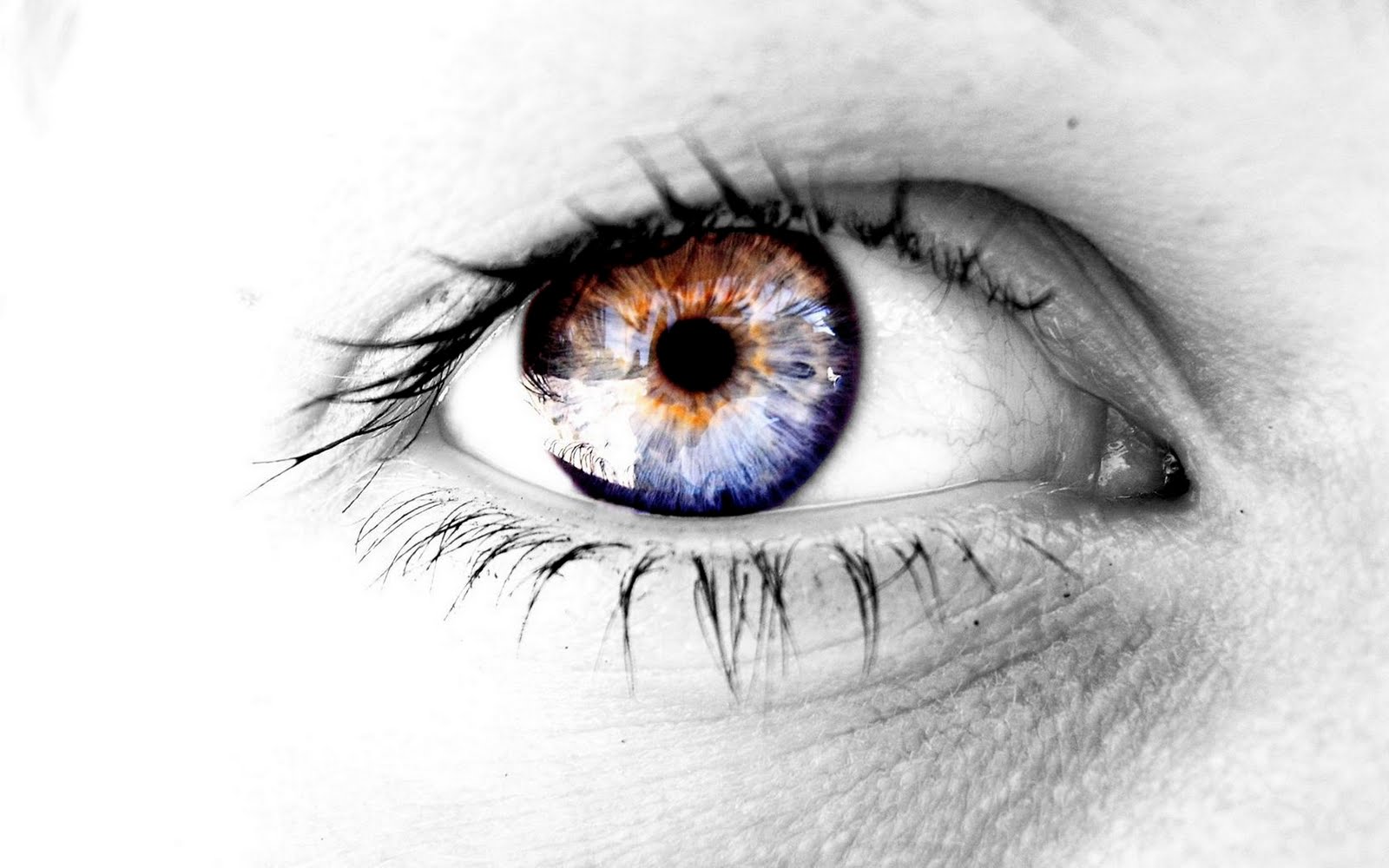
We are all looking out into the world from our own eyes, from our own perspective. We observe things, we interpret information, and then we draw conclusions. This is part of the definition of intelligence and higher reasoning. The way we process information is influenced by our experiences and our knowledge. Unless we can conclude that with all certainty a certain conclusion is a concrete fact, the conclusion we make could be better described as a judgment or an assumption.
My friend called me today to tell me about something she had witnessed while at the gas station. As she pumped her gas, she noticed a car driving noticeably slow in the street in front of the station. A truck driving behind the car blared his horn in impatient protest, and startled everyone in ear shot. The small car pulled up to one of the pumps and the driver turned off the engine. My friend watched as the driver opened the door and emerged from the car. A man made his way out of the car. He leaned on a cane as he made his way to the gas pump and began to pump gas into the car. Recognizing the driver as a man she knew from town, my friend turned her attention back to the truck driving down the street who had honked at the man. Little did the driver in the truck know that this man had just lost his wife to cancer; that he had injured his leg in a car accident several months ago; that his son and daughter-in-law, his only family, just announced that they are moving out of state.
This story highlights an important lesson. We don't know what is going on in other people's lives. We have no idea what motivates other people to do things, we may never know, and it's not really any of our business. The person ahead of you in line may have just lost his job; the lady working in the check out at the grocery store owns a home that just went into foreclosure; the little kid who is always loitering around at the convenient store is ignored by his father and his mother hits him when she drinks. While the truck driver was understandably frustrated that the car in front of him was driving too slow, all he needed to do was change lanes, or wait a few extra seconds for the man to turn into the gas station.
People's circumstances do not excuse them from following the rules of society, or respecting other people's personal liberties, but we should be a little easier with each other. We cannot let our judgments and assumptions allow us to get so easily irritated or angry. If we are more conscious of our thinking and how we connect to others, we will be much better at not allowing assumption and conjecture to guide our behavior. A small change sometimes has the biggest results.
My friend made a point to say hello to the man when she was finished pumping her gas. The man smiled at her and said, "Looks like a beautiful day today. Don't you love it when the sun is shining?" She smiled back at him and pulled her car out into the street.
Welcome! This is a place where we work together to "peel the onion" and get to the heart of our experiences. Together we will identify the layers, and with practice, learn to effortlessly see through those layers so that we don't get stuck by them. Life is a journey led by the well-traveled. Travel with me!
Friday, June 17, 2011
Friday, June 3, 2011
Mirror, Mirror On the Wall….
As I do every day, I called my house one day not too long ago while on the way home from work to let my kids know I had left the office. My teenage son answered, and we had a short (and apparently painful) conversation. He was clearly irritated with me, as my call must have been interrupting something much more interesting. At one point, I asked him if he was even listening to me, and his exasperated response was that he already knows what I am calling to say. I was not happy with his annoyed tone of voice, and I told him this as we hung up. While driving, I reflected upon our conversation. I wanted to know why he always seemed so irritated with me, and seemingly without reason? Then it hit me. The reason he acts so irritated with me on the phone is because I do the exact same thing to him. Because I am usually tired and annoyed when I call, and my tone is frequently irritated and impatient, my son was being my mirror accordingly. I realized that I need to watch what I am putting out there, because whatever I put out there is going to reflect right back at me.
Now I know this sounds a little simplistic, but I believe that thinking of this in this way is even more meaningful than what psychologists would identify as him modeling my behavior, or him simply acting like a teenager. Yes, he was reacting to me in a fashion that he had learned through observing me; however, imagining him as a mirror reflecting back to me made a much bigger impression on me. Thinking of it in this way helped me to internalize the lesson, as it struck me as a clear demonstration of how the mirrors work. From that point on, I made a concerted effort to put out what I want to see reflected back. At first, my loving, patient responses while on my drive home went unnoticed by my son. But then, like a light switch had been turned on, I began to see a shift. His tone began to soften, and we were having normal, peaceful conversations. All I had to do was change what I was putting out there, and the reflection I was getting back began to change. This new understanding led me to imagine everyone I encountered literally with little mirrors on them, reflecting back to me. Right away, I started to notice things that I had never seen before.
I began to monitor my own behavior much more closely and be consciously aware of my moods. I started to interact with people with a whole new understanding, and it was practically effortless. When I was irritated with someone, I identified the quality in them that was irritating me, and then I tried to see how it was something I was putting out there that was reflecting back at me. Once I could identify and own the quality, I could then acknowledge it and put it away. The things that were irritating me did not bother me as much anymore. Amazingly, once I could see that the things other people were doing only irritated me when they struck a chord within me, their behavior no longer affected me in the same way. It was almost like once I forgave the quality within me, it no longer existed in the reflection. Dealing with others became much more peaceful, and now that I truly understand what I am seeing in my relationships is largely a result of the mirror, I have been able to appreciate my interactions with others on a whole new level.
Everyone is a mirror. What do you see in your reflection?
Subscribe to:
Posts (Atom)

